What Bergen Is Known For
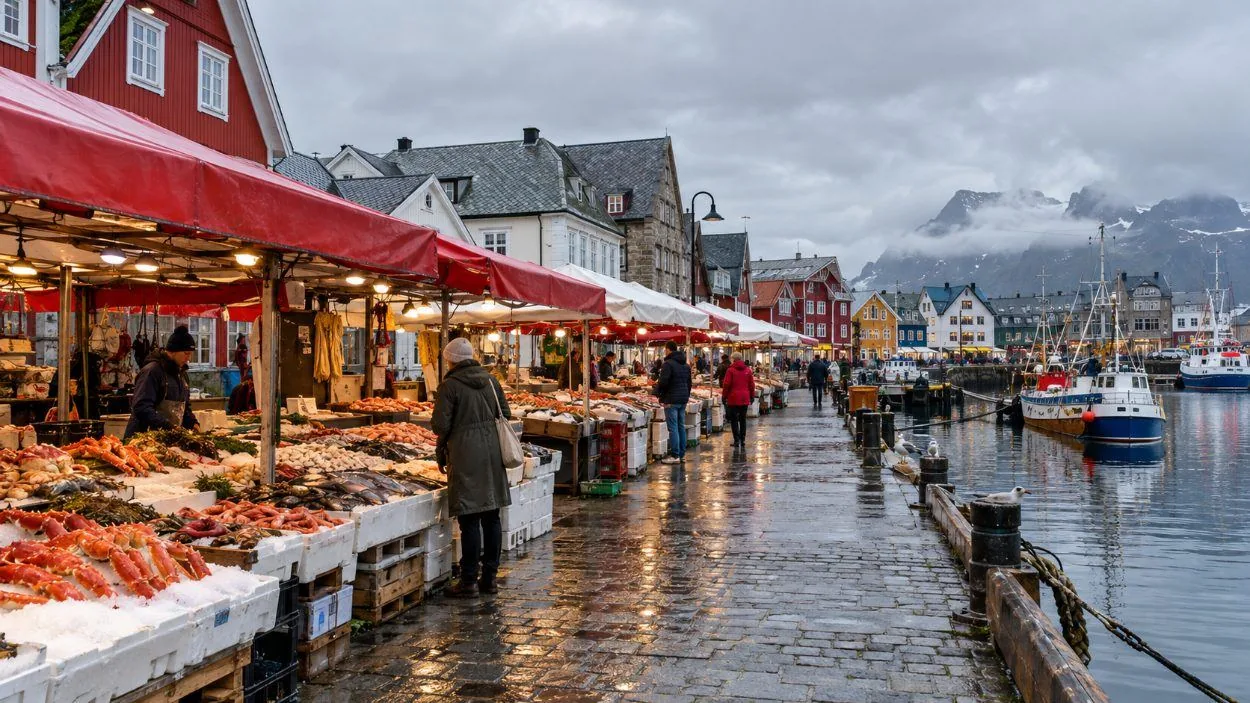
The fish, first
Bergen’s food identity is a trading identity. German merchants worked the quay at Bryggen from the 1230s, the Hanseatic Kontor was founded around 1360, and what went out was stockfish and fish oil — in the 1300s dried fish made up over eighty per cent of Norway’s exports. The city ate what the trade left behind and made dishes out of it: persetorsk, prinsefisk, røkerumpe, a fish soup seasoned with vinegar and sugar. The trade that built the kitchen.
The market everyone photographs
Fisketorget, the fish market, is mentioned as far back as 1278 and moved to its present spot in 1558. It is the picture on the postcard and it is also the one part of the city food scene Norwegians argue about in their own national press. Worth knowing before you go rather than after. Both sides of that argument. Next to it, Mathallen has been running indoors and year-round since 2012, while the outdoor stalls are seasonal and open from 1 May. What is inside.
The bun
The skillingsbolle arrived as a German pastry with the Hanseatic League in the 16th century and Bergen has been eating it for over five hundred years. The city’s own tourist board calls it the national bake. It originally had raisins in it; they disappeared during the ingredient shortages of the Second World War and never came back. The bun in detail.
A city of gastronomy with almost nothing to book
The UNESCO title came in 2015 and has to be renewed every four years by report to Paris. As of 2024 Bergen is one of only two Cities of Gastronomy north of France. And yet there is no cooking class here, no brewery tour, and no tasting at the fish market itself. There is one dedicated food walk — three and a half hours, thirteen tastings, five cafés and restaurants — and the longest listing in the food category is a six-hour bus day to the Hardangerfjord whose entire food content is one freshly made waffle and a small tasting of a local drink. What the title does and does not mean.
And the rain
Bergen’s normal annual precipitation is 2,495 mm, measured at the Florida station for 1991 to 2020, and the city itself says it rains on about two hundred days a year. That is one of the reasons so much of the food here is indoor food: soup, buns, a counter, a cellar full of cider. The rain, in numbers.
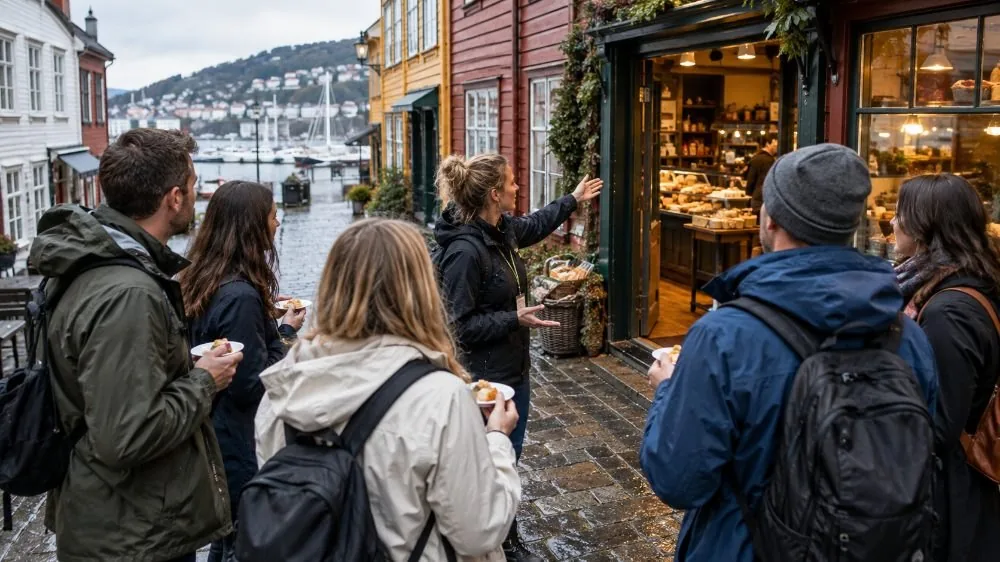 The only real food walk
Bergen: A Taste of Bergen Food Tour with Fløibanen Funicular
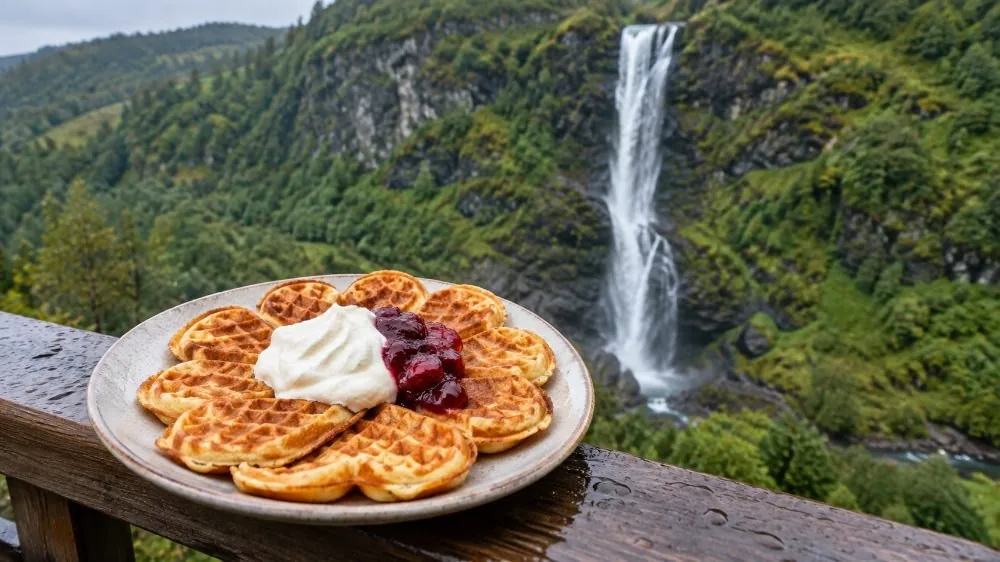 A day out, not a food tour
Bergen: Old Town and Waterfalls Guided Tour with Waffles
The food walk itself
Thirteen tastings over three and a half hours, five cafés and restaurants, finishing at Fløirestauranten on Mount Fløyen with return Fløibanen tickets included. Capped at eight people and wheelchair accessible. The listing is marked not suitable for vegans or vegetarians, and vegetarian and vegan options are available with 24 hours’ notice on an adjusted offering. Both halves of that are true and you need the second one before you book.
Frequently asked questions
What is Bergen known for, food-wise?
Fish, mostly. Eight hundred years at the centre of the Norwegian fish trade left the city with persetorsk, a sweet-and-sour fish soup, prinsefisk and røkerumpe, plus a fish market mentioned in records as early as 1278. The other thing Bergen is known for eating is the skillingsbolle, the cinnamon bun Hanseatic merchants brought from Germany in the 16th century.
Why is Bergen a UNESCO City of Gastronomy?
It was designated in 2015 and is the only Norwegian city in the Creative Cities network for food; as of 2024 it is one of only two north of France. The status has to be renewed every four years by report to UNESCO in Paris. The network itself was founded in 2004.
Is the Bergen fish market worth visiting?
It is worth walking through and it is genuinely contested. In 2013 Aftenposten ran a piece calling it Norway’s biggest tourist trap, quoting a Bergen-born marketing professor who said it was overpriced and that people who live here buy their seafood elsewhere; the city’s tourism director answered that nobody was complaining and visitor numbers were climbing. The argument has never really stopped.