Seafood in Bergen, Explained
The soup you should order first
Bergensk fiskesuppe is slightly sweet-and-sour, seasoned with vinegar and sugar. That is the distinguishing feature and hardly anybody mentions it, which is how so many visitors end up convinced their bowl has turned. Underneath the seasoning it is stock from young saithe bones, finely shredded vegetables, fish balls, and both sour cream and cream; old recipes keep asking for pickled purslane. The full recipe history.
Cod, four ways
Persetorsk is cod cured a long time in salt and sugar, pressed, and served with egg butter, boiled potatoes and vegetables — Bergen Christmas food, with its own city day on 28 January since 2024. Prinsefisk is a steamed fillet in white cream sauce with shrimp or crayfish tails, said to have been invented in Bergen for the 1856 visit of Crown Prince Carl of Sweden. Røkerumpe is the tail piece, smoked and salted, served with a white nutmeg sauce, carrots and potatoes. And stockfish is the same animal again — skrei, Northeast Arctic cod from the Barents Sea, air-dried on racks with no salt at all. Persetorsk and stockfish each have their own page.
Fishcakes, which is what people here actually eat
The everyday version of all this is the fishcake and the fish pudding, sold over a counter and eaten without ceremony. Søstrene Hagelin is a long-standing Bergen fishcake and fish-pudding shop and a real local institution — the sort of place that answers the question “what do people here eat” far better than any restaurant menu does. Where people who live here go.
Salmon, and a correction
Norwegians did not historically eat salmon raw. Japan was the market Norway had to create, and it took a delegation to Tokyo in 1985 to do it. If you were expecting sashimi to be the ancient Norwegian way with fish, it is the opposite — it is the newest thing on the table. How that happened.
Where to eat it
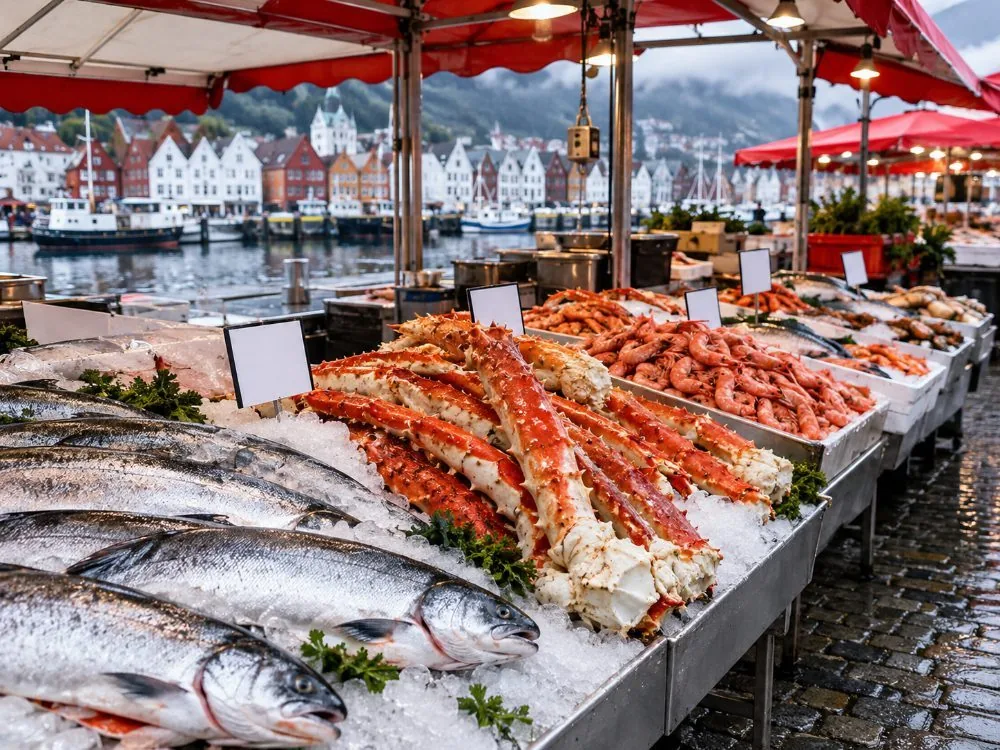
Two obvious places and one argument. Mathallen has been indoors and open year-round since 2012; the outdoor fish market stalls are seasonal, opening 1 May, and hours move, so check before you go. The argument is about the market itself, and it is worth reading before you turn up hungry. The fish market, both sides. Mathallen.
There is no fish-market tasting product in Bergen — in the city whose fish market is the thing everybody photographs, nobody sells a guided tasting there. The food walk includes fresh seasonal seafood among its tastings, which is the closest thing on offer.
A tasting walk that includes seafood
Thirteen tastings across five cafés and restaurants over three and a half hours, among them fresh seasonal seafood, traditional sardines and seasonal meat and fish at Fløirestauranten on Mount Fløyen. Maximum eight people, wheelchair accessible, return Fløibanen tickets included. The listing is marked not suitable for vegans or vegetarians, and vegetarian and vegan options are available with 24 hours’ notice on an adjusted offering. Both halves of that are true and you need the second one before you book.
Frequently asked questions
What is the food like in Bergen?
Preserved fish, bread and buns, and a lot of it eaten indoors because it rains here about two hundred days a year. The dishes that are genuinely Bergen’s are persetorsk, a pressed salted cod eaten at Christmas; bergensk fiskesuppe, a fish soup seasoned with vinegar and sugar so it tastes faintly sour; prinsefisk, steamed cod in cream sauce with shrimp; and røkerumpe, the smoked tail piece of the cod.
Is Bergen fish soup supposed to taste sour?
Yes. Bergensk fiskesuppe is slightly sweet-and-sour, seasoned with vinegar and sugar, and that is the single feature that separates it from every other Norwegian fish soup. It is built on stock from young saithe bones with shredded vegetables, fish balls, sour cream and cream. If it tastes faintly of vinegar, it is correct.
Can I do a tasting at the Bergen fish market?
Not as a bookable product. There is no fish-market tasting tour in Bergen, which is a strange gap in a city whose market is its most photographed sight. The main food walk includes fresh seasonal seafood among its thirteen tastings, and one private culinary heritage walk — two hours, up to three people — spends about an hour at the market and about an hour at Bryggen.