The Bergen Fish Market
The argument, both sides
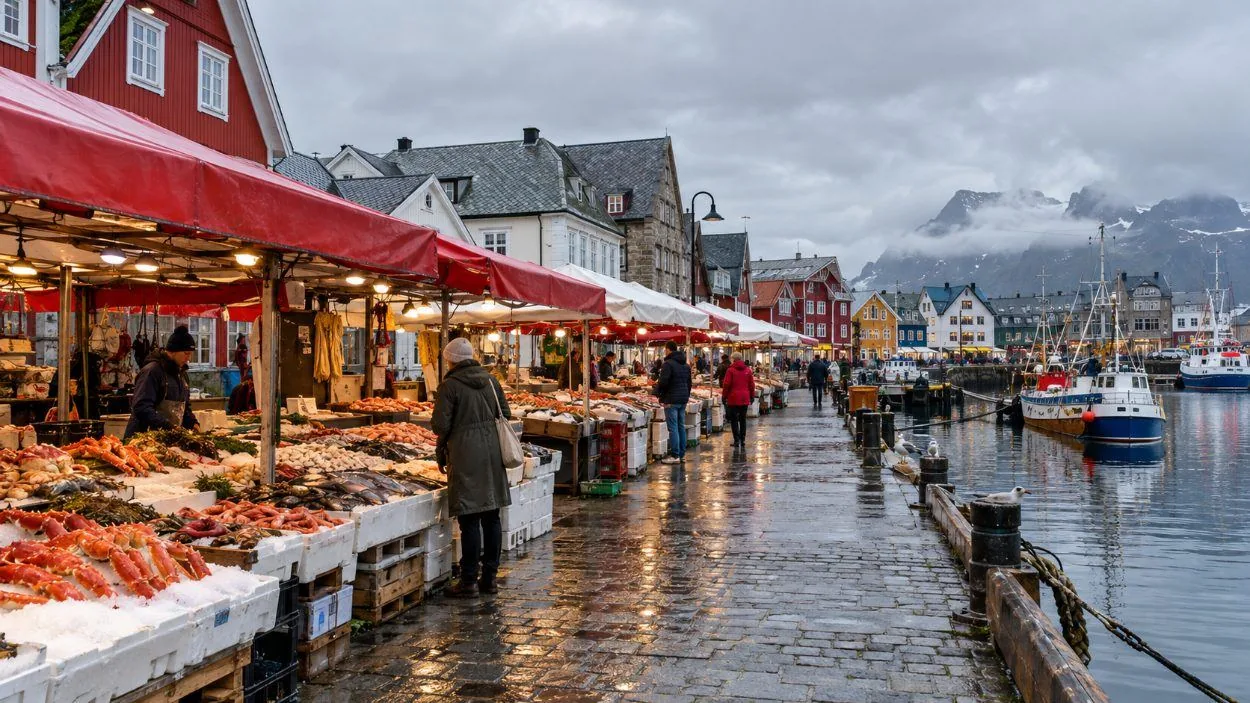
In 2013 Aftenposten ran the headline “Norges største turistfelle” — Norway’s biggest tourist trap — quoting the marketing professor and Bergen native Trond Blindheim, who said the market was overpriced and inauthentic and that locals avoid it because better seafood is available elsewhere in the city. Bergen’s tourism director at the time, Ole Warberg, defended it, saying there had been no customer complaints and that visitor numbers were rising. The argument still runs in the Bergen press. Nobody has a number for how many locals shop there, so treat anyone who quotes you one with suspicion.
My own version, from five years on a counter at the Mathallen end: the market is a good place to look at fish and a mixed place to eat it, and the people who enjoy it most are the ones who went in expecting a market rather than a restaurant.
What is actually there
The stallholders are named individuals and the city publishes the list — currently nine traders outdoors and two inside Mathallen. The mix surprises people: Greek and Thai food stands sit alongside the seafood. The outdoor market is seasonal, opening 1 May and running through the summer, while Mathallen runs indoors and year-round. Hours move, so check before you go rather than trusting a printed timetable. What is inside Mathallen.
How it got its shape
Christoffer Valkendorf moved the market to its present site in 1558. It was reorganised after the 1702 city fire; “Triangelen” was built in 1730; Zachariasbryggen was fitted with sixty live-fish tanks in 1889; flower and fruit sections were added in 1923; the “Rundetårn” kiosk went up in 1929; and in 1972 the market area was reduced by 350 m².
The gap nobody has filled
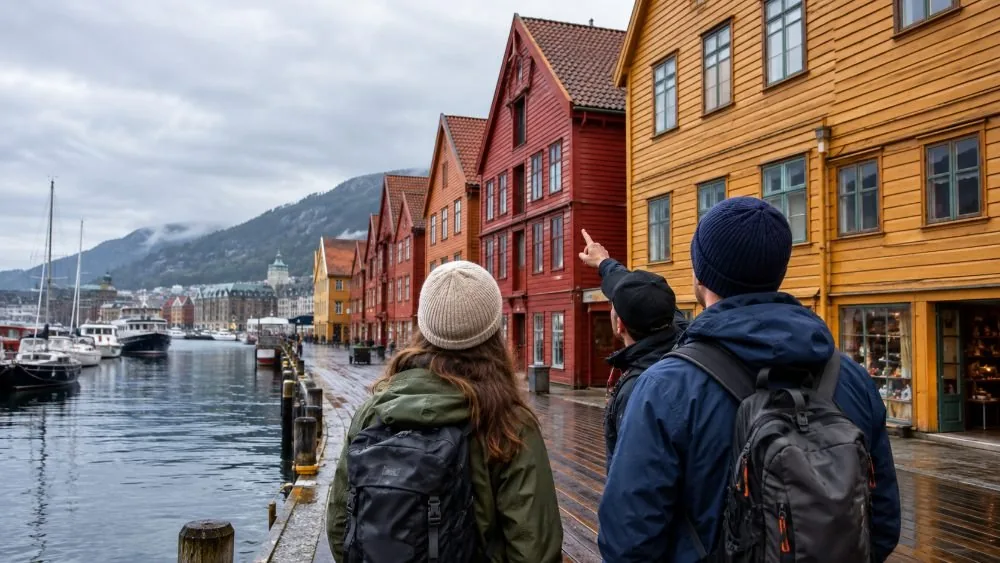
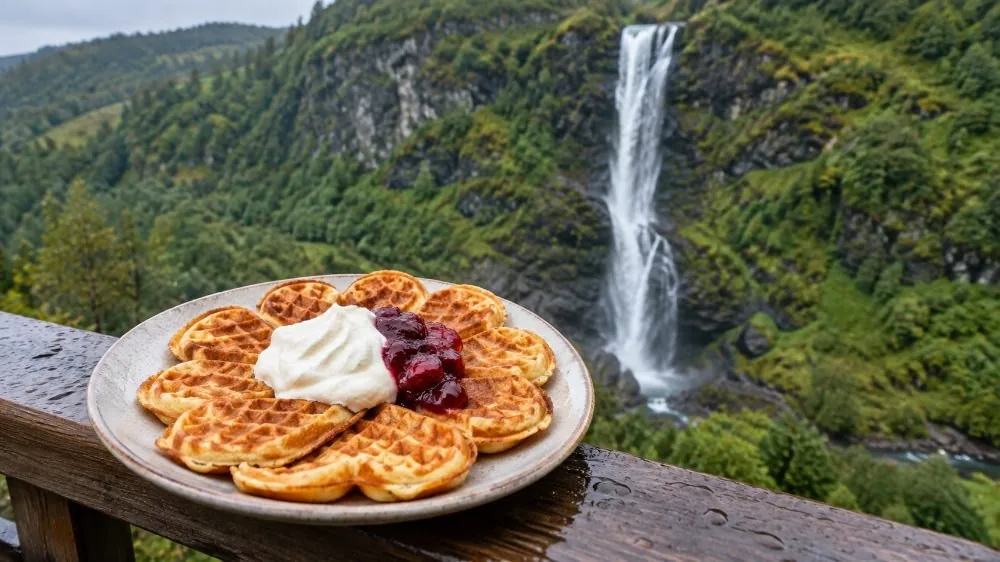
There is no guided tasting at the fish market. None. In the city whose market is its most photographed sight, nobody sells that product. The nearest things are a private two-hour culinary heritage walk for up to three people, which spends about an hour at the market and about an hour at Bryggen, and the six-hour Hardangerfjord day trip that meets and ends at the Fish Market, Nøstegaten 40, and whose food content is one freshly made waffle and a small tasting of a local drink.
Come in the morning, look properly, then eat somewhere a local sent you. That list is here.
 Private · up to three
Bergen: Private Walking Tour in Bergen Culinary Heritage Route
 A day out, not a food tour
Bergen: Old Town and Waterfalls Guided Tour with Waffles
The food walk, which does not stop here
Three and a half hours and thirteen tastings across five cafés and restaurants, meeting at the entrance to the tourist office at the bottom of the stairs and ending at Fløirestauranten on Mount Fløyen with return Fløibanen tickets included. Maximum eight people, wheelchair accessible, gratuities not included. The listing is marked not suitable for vegans or vegetarians, and vegetarian and vegan options are available with 24 hours’ notice on an adjusted offering. Both halves of that are true and you need the second one before you book.
Frequently asked questions
Is the Bergen fish market a tourist trap?
Norwegians have argued about exactly that in print. In 2013 Aftenposten called it Norway’s biggest tourist trap, quoting a Bergen-born marketing professor who said it was overpriced and inauthentic and that locals buy seafood elsewhere; the city’s tourism director answered that there had been no customer complaints and visitor numbers were rising. Both positions are still quoted. It is worth walking through either way.
How old is the Bergen fish market?
A fish market at Bergen is mentioned in 1278, originally at the end of Nikolaikirkeallmenning. It was moved to its present site by Christoffer Valkendorf in 1558 and reorganised after the city fire of 1702.
When is the Bergen fish market open?
The outdoor market is seasonal and opens on 1 May, running through the summer. Mathallen, the indoor hall beside it, is open year-round and has been since 2012. Hours change, so check before you go.