Cider from Hardanger
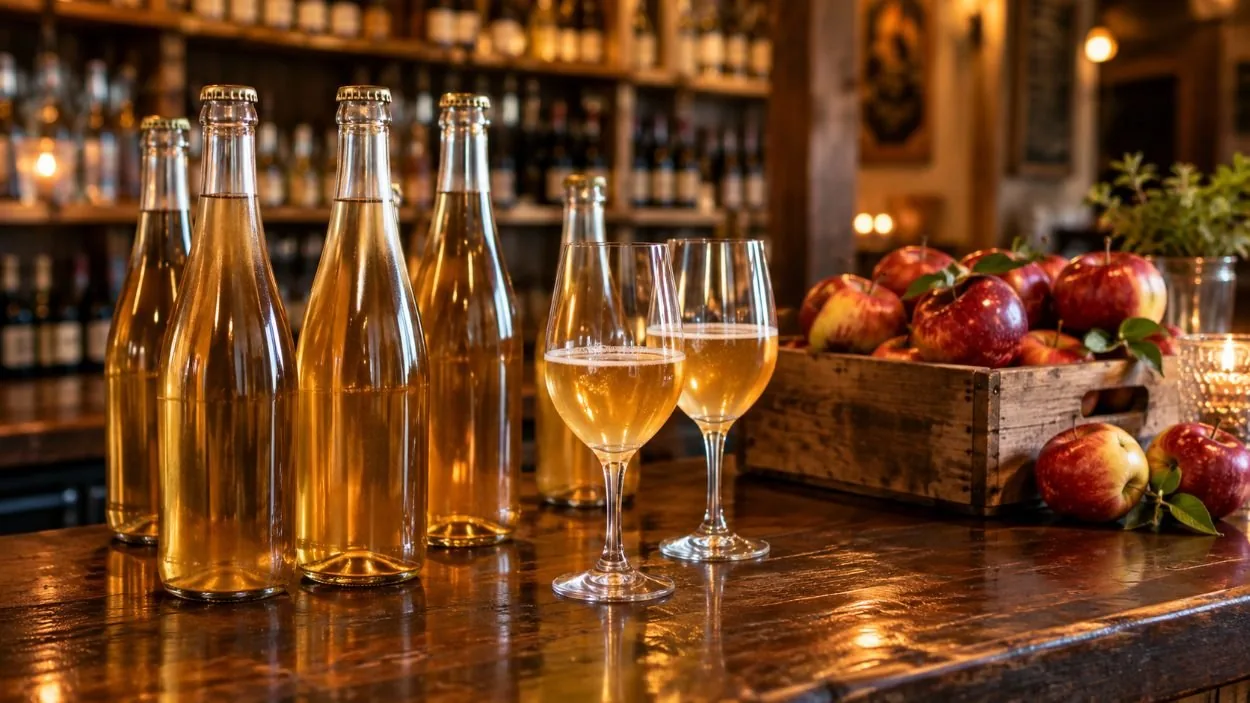
How it is made
Apples are grated and pressed, the juice is strained, and fermentation runs cool — 6–12 °C — either on wild yeast from the skins or on added cultured yeast. Some producers bottle-ferment. The protected-name framework was deliberately modelled on Champagne-style appellation rules, which is where the local billing as Norway’s answer to champagne comes from; that is marketing, and worth hearing as marketing.
Dessert apples, which is unusual
Most cider regions use dedicated cider varieties. Hardanger uses eating apples — Aroma, Discovery, Summerred and Rød Gravenstein are the four most common — because the cold leaves even dessert fruit with enough acidity to work. Hardanger sits at roughly 60°N, about as far north as commercial fruit growing goes. Warm summers, cool autumn nights and water reflecting light onto steep orchard slopes give a high sugar-to-acid balance, and the cider reads light, fresh, markedly acidic and apple-forward.
How old it is
Cider is documented in Hardanger back to the Middle Ages, introduced by monks. Commercial production dates from the early 1900s, and the protected designation only arrived in 2009. So: an old drink with a young legal name.
Tasting it in Bergen
This is the one drink category Bergen actually sells properly. A ninety-minute guided tasting of craft ciders from Hardanger runs at Bergen’s first dedicated cider bar in the city centre, covering the history, the production methods and the producers themselves. It is wheelchair accessible. The exact street address is not published on the listing; the not-included list and the group cap are not published either, and the minimum age is not stated, though alcohol is served, so Norway’s own age rules apply in practice. It is the shortest thing on the Bergen food shelf and the only one that is both step-free and about a genuinely protected local product. It is not a substitute for a meal. The tasting, up close.
The main food walk also carries three cider tastings and a local apple cider among its thirteen tastings, if you would rather have the cider inside a meal. Every drink tasting in Bergen.
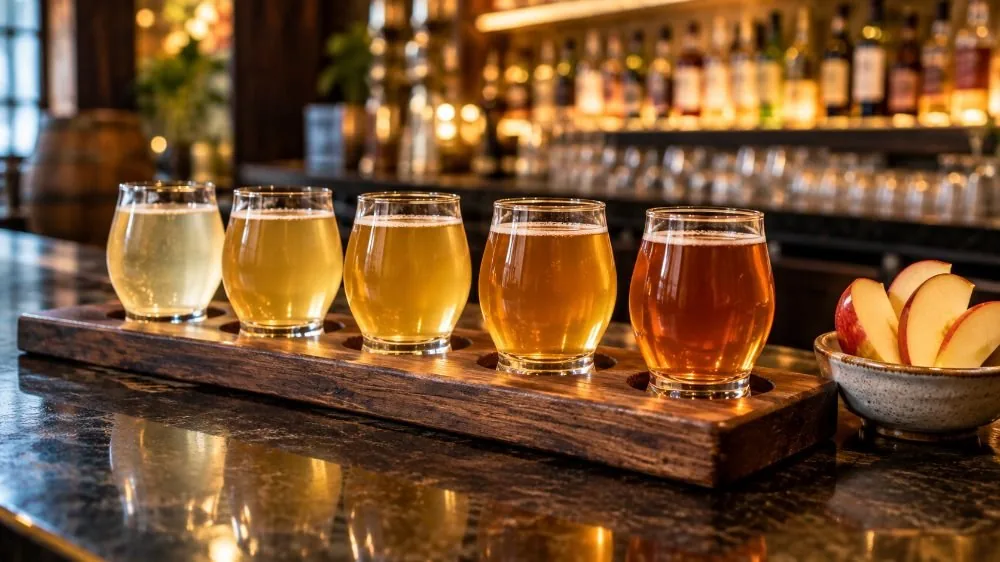 Shortest · step-free
Bergen: Norwegian Cider Tasting Experience
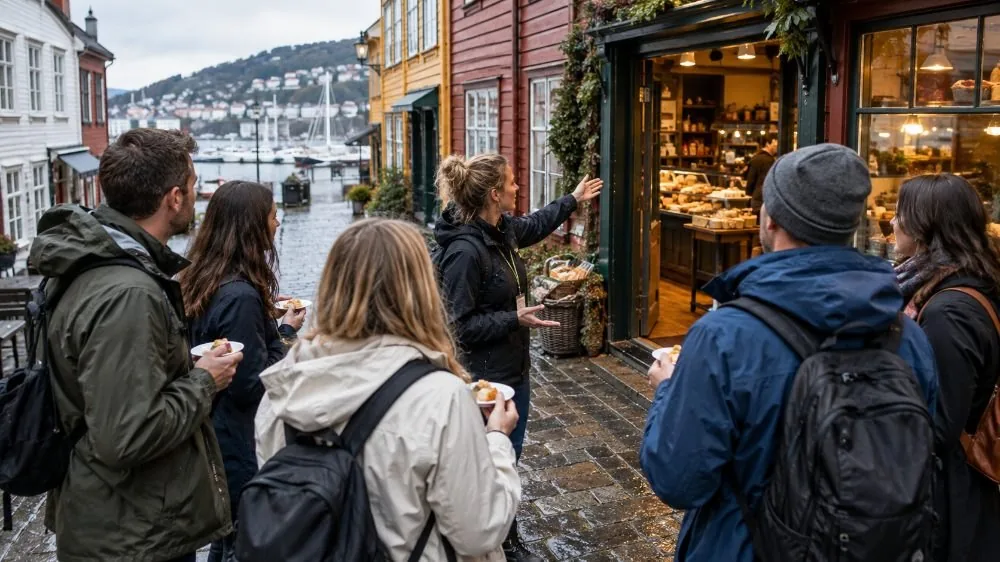 The only real food walk
Bergen: A Taste of Bergen Food Tour with Fløibanen Funicular
Ninety minutes of Hardanger cider
A guided tasting of craft ciders from Hardanger with the history, the production methods and the producers, at Bergen’s first dedicated cider bar in the city centre. Step-free throughout, with free cancellation up to 24 hours ahead. Good for a rainy ninety minutes rather than as dinner.
Frequently asked questions
What makes Hardanger cider special?
It carries a protected geographical indication, “Sider frå Hardanger”, in force since 17 April 2009. The apples must be grown in the seven Hardanger municipalities, concentrate is banned, and pressing, fermentation and storage must all happen in the region. Unusually, it is made from dessert apples rather than dedicated cider varieties, because the northern cold leaves even eating apples acidic enough.
What does Hardanger cider taste like?
Light, fresh, markedly acidic and apple-forward. Hardanger sits at roughly 60 degrees north, about as far north as commercial fruit growing goes, and the combination of warm summers, cool autumn nights and water reflecting light onto steep orchard slopes gives a high sugar-to-acid balance.
Can I do a cider tasting in Bergen?
Yes. There is a ninety-minute guided tasting of Hardanger craft ciders at Bergen’s first dedicated cider bar in the city centre, and it is step-free. The exact street address is not published on the listing, and the group cap is not stated. The main food walk also includes three cider tastings among its thirteen.