Stockfish and the Bryggen Trade
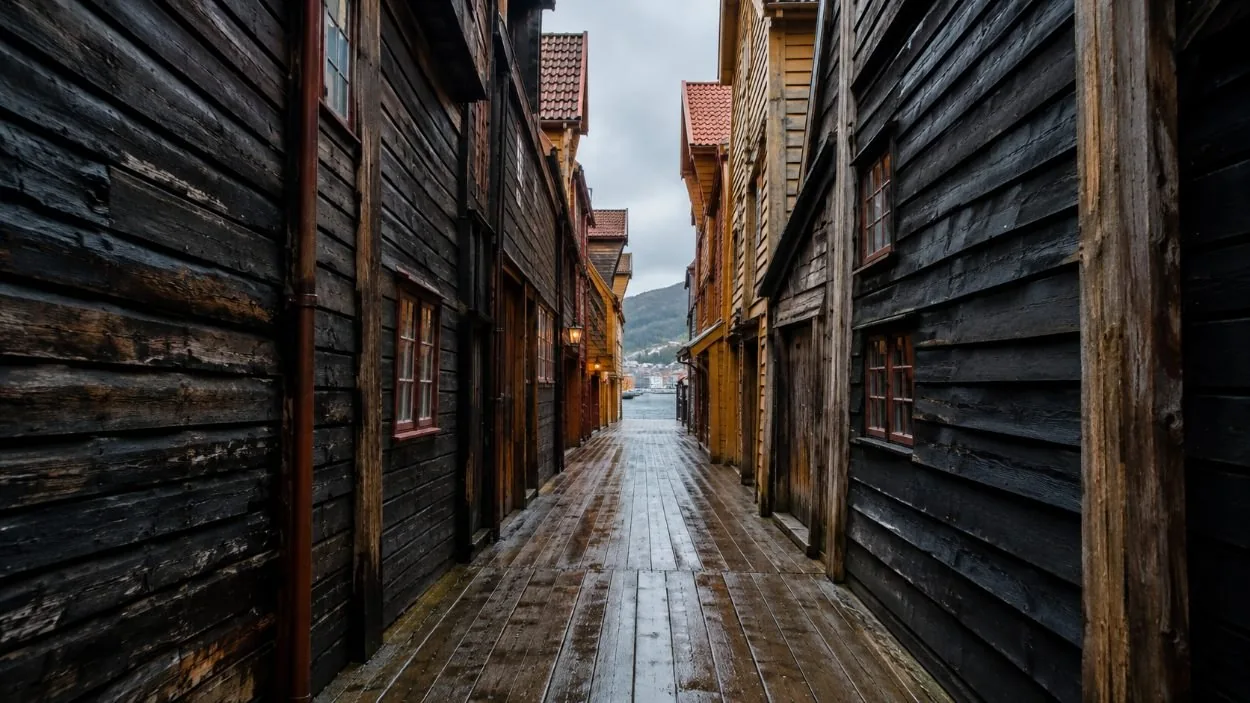
What stockfish is
Skrei — Northeast Arctic cod from the Barents Sea — air-dried on racks with no salt at all. The technique is roughly a thousand years old and the product was Norway’s number-one export for nearly a millennium. “Lofoten stockfish” holds EU Protected Geographical Indication status. In 1432 the Italian merchant Pietro Querini carried sixty pieces of it to Venice, and Italy is still the largest importer.
What went out, and what came in
Out went stockfish and fish oil, with a near-total monopoly on both. In came grain, flour, malt and beer. The supply line was the Nordlandshandelen: fish and oil from the north traded against grain, flour and textiles from the south. A city with no grain of its own ate what the ships brought, and that is the whole explanation for why Bergen’s food is bread, preserved fish and beer-adjacent trade goods rather than anything grown nearby.
The best food fact on the quay
Open fire was banned in the wooden tenements. All cooking therefore happened in the Schøtstuene, the merchants’ communal assembly halls — which is the reason the Hanseatic quarter had separate kitchen buildings at all. A fire regulation is why the eating was communal.
What you are looking at today
The buildings standing now are essentially the rebuild that followed the 1702 city fire, put back on the medieval plan. A further fire in 1955 destroyed part of the site. Roughly sixty-two buildings survive, about a quarter of what stood before 19th-century demolition and that 1955 fire. Bryggen went onto the UNESCO World Heritage list in 1979.
Walking it with somebody
One private culinary heritage walk spends about an hour at the Fish Market and about an hour at Bryggen before returning to the centre, with a local guide, transport and a food tasting included. It is two hours, private, for up to three people, and the listing warns that the programme may vary with the booking date and how busy the city is. Its free cancellation window is not published. The listing, up close.
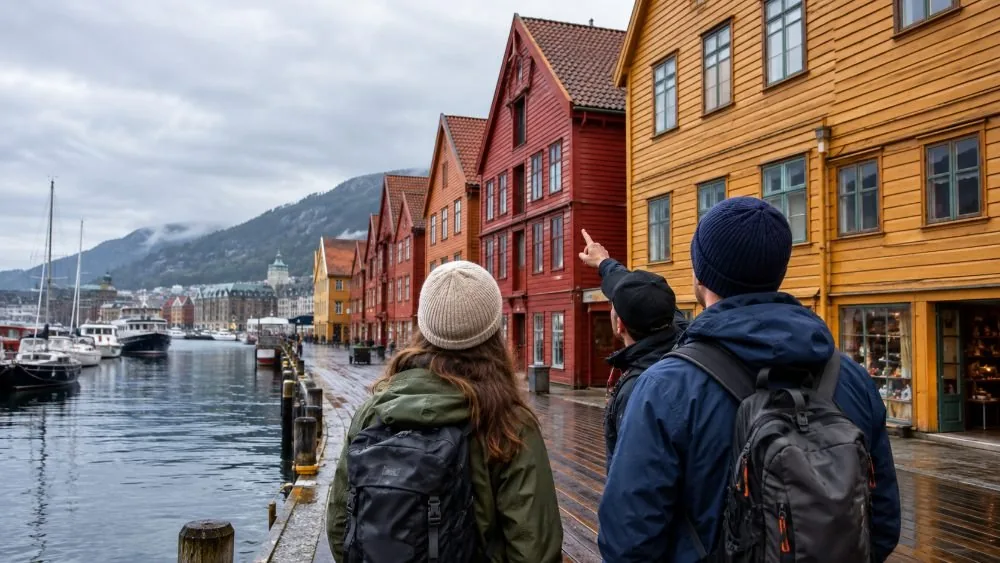 Private · up to three
Bergen: Private Walking Tour in Bergen Culinary Heritage Route
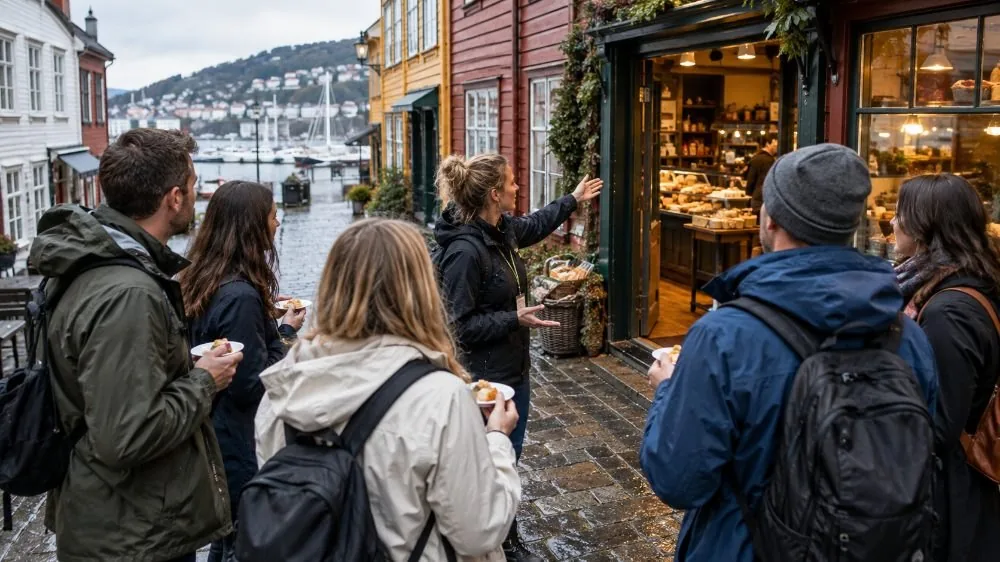 The only real food walk
Bergen: A Taste of Bergen Food Tour with Fløibanen Funicular
The tasting walk itself
Three and a half hours, thirteen tastings across five cafés and restaurants, ending at Fløirestauranten on Mount Fløyen with return Fløibanen tickets included. Capped at eight people and wheelchair accessible, it is the only listing in Bergen that is food-first from start to finish. The listing is marked not suitable for vegans or vegetarians, and vegetarian and vegan options are available with 24 hours’ notice on an adjusted offering. Both halves of that are true and you need the second one before you book.
Frequently asked questions
What is stockfish?
Skrei, the Northeast Arctic cod of the Barents Sea, air-dried on wooden racks with no salt at all. The technique is around a thousand years old and dried fish was Norway’s leading export for nearly a millennium. Lofoten stockfish holds EU Protected Geographical Indication status.
What did the Hanseatic merchants trade at Bryggen?
Stockfish and fish oil went out, with a near-total monopoly on both, and grain, flour, malt and beer came in. The supply line, the Nordlandshandelen, exchanged fish and oil from northern Norway for grain, flour and textiles from the south. In the 1300s dried fish was over eighty per cent of Norway’s exports.
Why did Bryggen have separate kitchen buildings?
Because open fire was banned in the wooden tenements. All cooking was done in the Schøtstuene, the merchants’ communal assembly halls, which is why the Hanseatic quarter had dedicated kitchen buildings at all.