What Not to Miss in Bergen
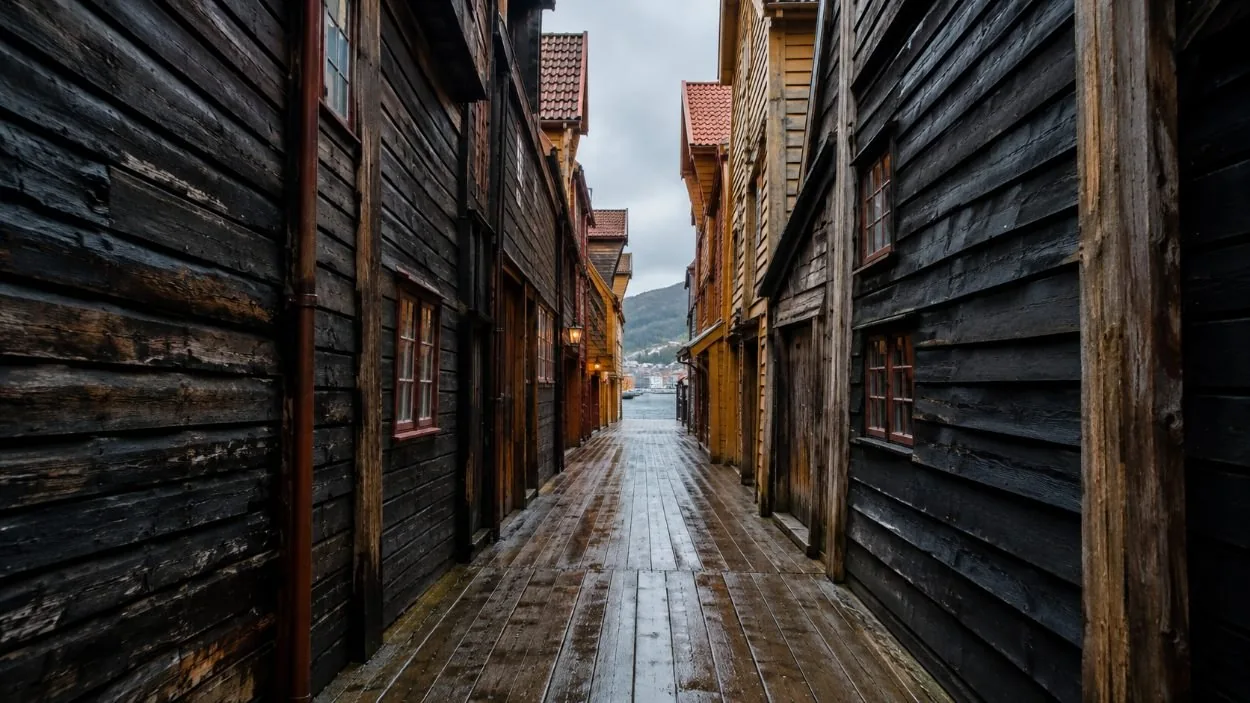
Bryggen, and the reason it has separate kitchens
Inscribed by UNESCO in 1979. German merchants traded here from the 1230s; the Hanseatic Kontor was founded around 1360, was the last of the League’s four great Kontors to open and the longest-lived, and ended in 1754 when the German Kontor became the Norwegian one. They shipped stockfish and fish oil out and brought grain, flour, malt and beer in, with a near-total monopoly on the first two — in the 1300s dried fish was over eighty per cent of Norway’s exports. The detail worth carrying round with you: open fire was banned in the wooden tenements, so all cooking happened in the Schøtstuene, the communal assembly halls. The buildings standing now are essentially the rebuild after the 1702 fire, put back on the medieval plan, with roughly 62 surviving. Stockfish and Bryggen.
The Fish Market, argument included
Mentioned as far back as 1278, moved to its present site in 1558, with the “Triangelen” built in 1730 and sixty live-fish tanks fitted at Zachariasbryggen in 1889. Mathallen opened indoors in 2012; the outdoor market is seasonal from 1 May. Go, but go informed: in 2013 Aftenposten called it “Norges største turistfelle”, quoting the marketing professor and Bergen native Trond Blindheim, while the city’s tourism director Ole Warberg defended it. The argument still runs. Both sides · Mathallen.
Fløibanen
Opened 15 January 1918. The track is 848 m long, it rises 302 m, the top station is 320 m above sea level and the ride takes about six minutes. The cars carry 120 passengers each and are named Rødhette and Blåmann, and it carries roughly 2.4 million passengers a year. Between 15 June and 31 August the four intermediate stops are served only on the hour, between 09:00 and 15:00. The flagship food walk includes return tickets, which is the tidiest way to do it. The funicular in full.
The things to actually eat
The skillingsbolle, which Hanseatic merchants brought from Germany in the 16th century and which has been Bergen’s favourite pastry for over five hundred years; its name means “shilling bun”, because baked goods were named after what they cost, and it originally contained raisins that vanished during the Second World War’s shortages and never came back. Bergen fish soup, which is meant to taste faintly sweet and sour. Persetorsk, the pressed cod with its own city day on 28 January. And Søstrene Hagelin, a long-standing fishcake and fish-pudding shop and a genuine local institution. The skillingsbolle · What Bergen is known for.
The famous dishes people arrive asking about — brown cheese, fårikål, matpakke, skolebrød, lutefisk — are national rather than Bergen’s, and brown cheese comes from a valley four hundred kilometres away. The difference, laid out.
Three of the four, in one booking
The food walk takes in five cafés and restaurants with thirteen tastings, and ends at Fløirestauranten on Mount Fløyen with return Fløibanen tickets included. Wheelchair accessible, capped at eight people, free cancellation up to 24 hours ahead.
Frequently asked questions
What should you not miss in Bergen?
Bryggen, on the UNESCO list since 1979; the Fish Market, mentioned as far back as 1278, with the indoor Mathallen alongside it since 2012; the Fløibanen funicular; and one meal with somebody explaining it. How to fit them into a day.
Why is Bergen famous?
For the Hanseatic trading quarter at Bryggen, eight hundred years at the centre of the Norwegian fish trade, some of the heaviest rainfall in Europe, and a UNESCO Creative City of Gastronomy designation granted in 2015 — the only one in Norway. The gastronomy designation.
What food is Bergen actually known for?
The skillingsbolle, a German pastry that arrived with Hanseatic merchants in the 1500s; fish soup that is meant to taste sweet and sour; and persetorsk, pressed cod, which has had its own city day on 28 January since 2024. The full list.