What Bergen Actually Eats
The dishes Bergen made
Persetorsk is cod cured a long time in salt and sugar, then pressed, then served with egg butter, boiled potatoes and vegetables. It is Bergen Christmas food. One Bergen chef has called it perhaps the most Bergen dish there is and said it exists nowhere else, and in 2024 the city council formally made 28 January Persetorsk Day, after the idea started as a joke on social media. The salt-and-sugar cure points at merchant kitchens rather than working ones. The dish, in full.
Bergensk fiskesuppe is the one worth arriving prepared for. It is slightly sweet-and-sour, seasoned with vinegar and sugar, and that single fact is the whole difference between it and every other fish soup in the country. Traditionally it is built on stock from young saithe bones, with finely shredded vegetables, fish balls, and both sour cream and cream; old recipes keep calling for pickled purslane. If you taste it expecting chowder you will think something has gone wrong. Nothing has. Why it tastes like that.
Prinsefisk is steamed cod fillet under a white cream sauce with shrimp or crayfish tails, said to have been invented here for the 1856 visit of Crown Prince Carl of Sweden. Røkerumpe is the tail piece of cod, smoked and salted, with a white nutmeg sauce, carrots and potatoes. Puspas is the Bergen answer to fårikål, with carrots in it — the local variant of the national dish, which tells you most of what you need to know about how this city relates to the rest of Norway. More on the fish side.
And the skillingsbolle, the cinnamon bun Bergen treats as its own. Hanseatic merchants brought it from Germany in the 16th century and the city has been eating it for over five hundred years; the tourist board calls it the city’s national bake. Even Bergen’s signature pastry is an import that stayed. The bun, and the raisins that vanished.
The dishes that belong somewhere else
Fårikål — mutton on the bone, cabbage, whole black peppercorns, sometimes a little flour, with boiled potatoes — was voted the national dish on NRK radio’s Nitimen in the 1970s and confirmed again by a fresh vote in 2014. It is an autumn dish with its own feast day, the last Thursday in September. The name means mutton in cabbage and descends from the Danish gaas i hvidkaal. The national dish, properly.
Brown cheese was created in its modern form in 1863 by Anne Hov, a dairymaid at a mountain farm near Gålå in Gudbrandsdalen, who added cream to cow-milk whey and boiled it down. It is not cheese: it is made from whey, which is what is left after cheesemaking, rather than from curds. Anne Hov’s story.
The matpakke, the packed bread lunch every Norwegian workplace runs on, descends from the Oslo breakfast designed by the physician Carl Schiøtz and handed free to Oslo schoolchildren from 1932. Oslo, not Bergen. What a Norwegian lunch is.
Skolebrød — yeasted dough, custard, icing, desiccated coconut — emerged in the 1950s and is national rather than local. In western Norway, Bergen included, it is not even called that: here it is a skolebolle. Snacks and sweet things.
Lutefisk is dried whitefish, usually cod, cured in lye and rehydrated until it turns gelatinous, eaten at Christmas across Norway, Sweden and Finland. Its origins are unclear and no region of origin is documented, so anyone telling you it is a Bergen dish is guessing.
Raspeballer — grated raw potato and flour boiled in broth, with swede mash, smoked sausage, boiled meat and fried bacon — are associated with western Norway but eaten nationwide under at least eight names: komle, kompe, klubb, krumme, klot, ball, kjuke, potetball. The Thursday habit, komlatorsdag, is genuinely kept in the west, though as folk custom rather than anything documented.
If you remember one sentence from this page, make it the soup. Bergen fish soup is supposed to taste faintly sour, and more visitors send it back than any other dish in the city.
Why a guided tasting helps here
What a food tour in Bergen is really selling is translation. Someone to say that the brown cheese is not cheese, that the soup is meant to taste of vinegar, that nobody is waiting for your tip. Bergen is a small city and its food-tour shelf is short: one dedicated food walk of three and a half hours, a handful of tastings and day trips around it, no cooking class and no brewery tour at all. The whole shelf, listed.
 The only real food walk
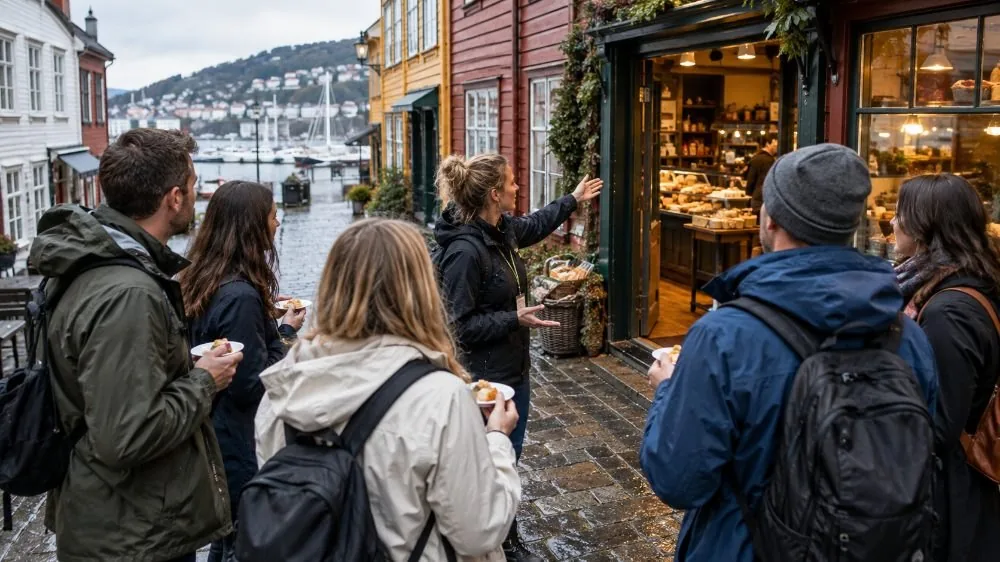
Bergen: A Taste of Bergen Food Tour with Fløibanen Funicular
 Shortest · step-free
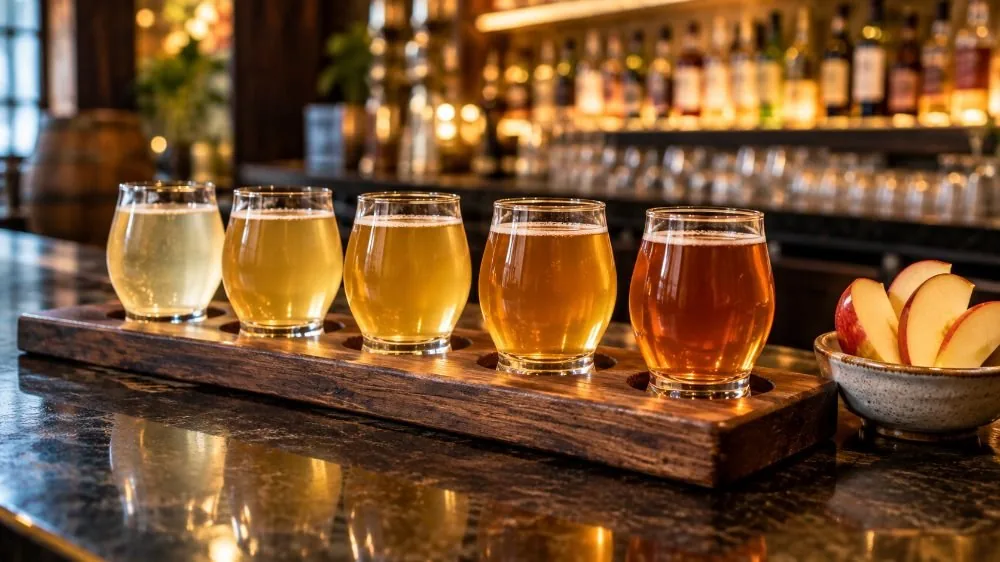
Bergen: Norwegian Cider Tasting Experience
 Somebody’s kitchen
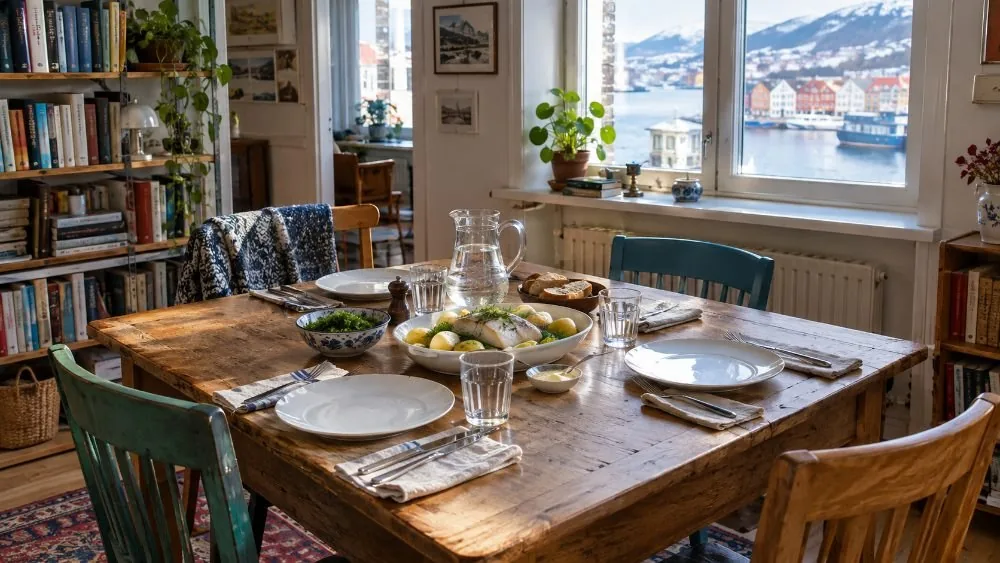
Bergen: Home-Hosted Lunch with a Local
The walk that covers most of this list
Three and a half hours, thirteen tastings — eleven food, two drink — across five cafés and restaurants, ending at Fløirestauranten on Mount Fløyen with the city underneath you. Capped at eight people, wheelchair accessible, with return Fløibanen funicular tickets included and gratuities not. The listing is marked not suitable for vegans or vegetarians, and vegetarian and vegan options are available with 24 hours’ notice on an adjusted offering. Both halves of that are true and you need the second one before you book.
Frequently asked questions
What is a typical meal in Norway?
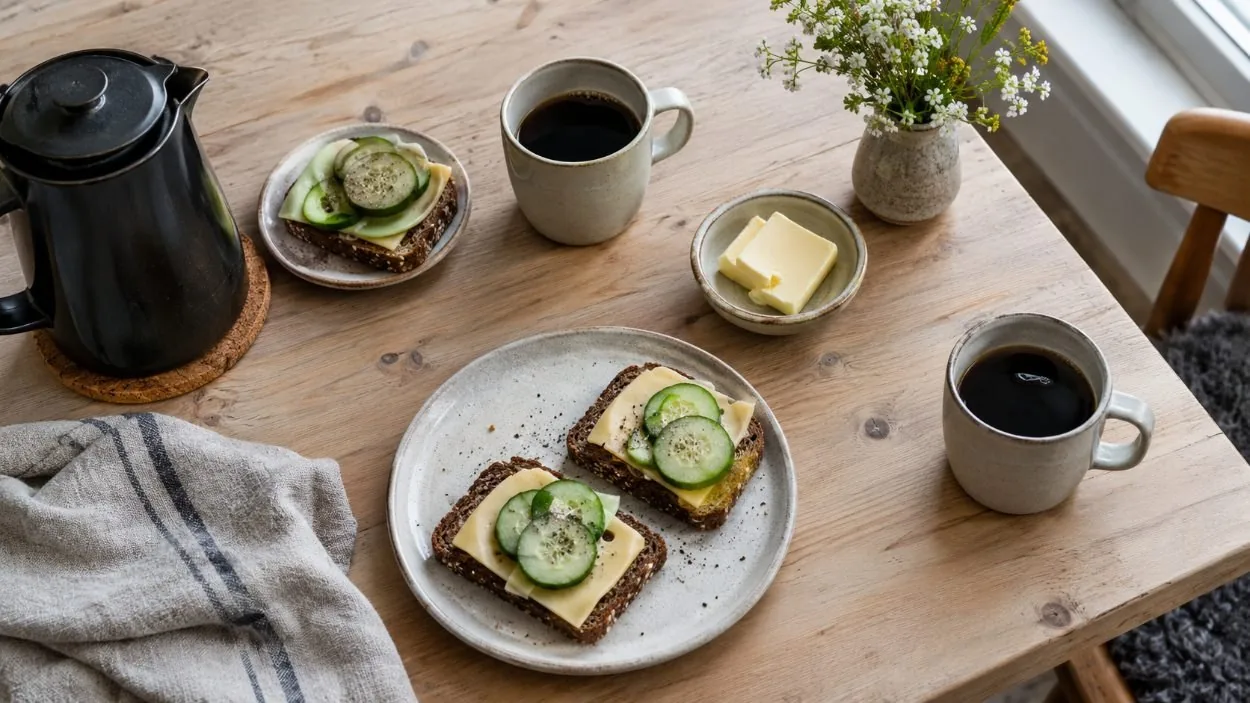
Bread carries the day. Breakfast and lunch are both usually open sandwiches — bread, butter, cheese, whatever is in the fridge — and dinner is the hot meal, eaten earlier than most of Europe manages. Fårikål, mutton and cabbage with whole peppercorns and boiled potatoes, is the national dish and an autumn one. Bergen’s own contributions are fish: persetorsk at Christmas, and a fish soup seasoned with vinegar and sugar.
Which dishes are actually from Bergen?
Persetorsk, which is pressed salted and sugared cod with egg butter and potatoes; bergensk fiskesuppe, the sweet-and-sour fish soup; prinsefisk, steamed cod in cream sauce with shrimp; røkerumpe, the smoked and salted tail of the cod; puspas, the Bergen version of fårikål with carrots in it; and the skillingsbolle, which the Hanseatic merchants brought from Germany in the 16th century and the city kept.
Is brown cheese a Bergen thing?
No. It was created in 1863 by Anne Hov, a dairymaid in Gudbrandsdalen, roughly four hundred kilometres away over the mountains, and it is technically not cheese — it is boiled-down whey with cream added, not curd. You will be offered it in Bergen constantly, including as a brown-cheese cheesecake on the main food walk, but it belongs to a valley in the east.